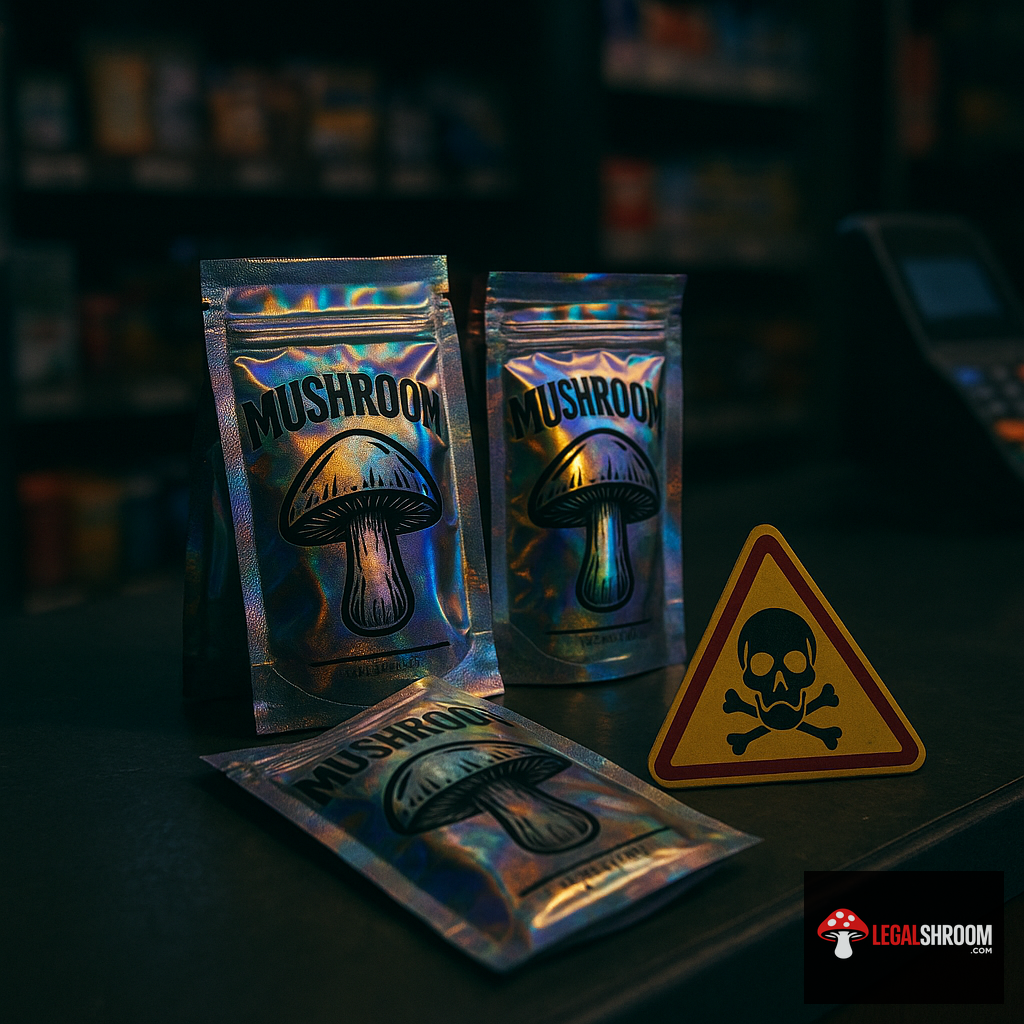
You've seen them at checkout counters everywhere: brightly colored packages of "mushroom gummies" and chocolate bars with trippy designs, sitting between energy drinks and vape cartridges. They're cheap, they're convenient, and they promise psychedelic effects without the legal risk.
But are gas station mushroom products safe?
Short answer: Usually not.
We're going to break down the real dangers, the counterfeit problem, what independent lab testing reveals, and how to tell the difference between legitimate mushroom products and gas station garbage that could land you in the ER.
🎧 Listen to this article • Click section buttons to navigate
The Real Dangers: Reddit Horror Stories
Let's start with what actually happens when people buy mystery mushroom products from gas stations.
Panic Attack from "Mushroom" Bar (r/PanicAttack, 21 comments)
A Reddit user bought a mushroom chocolate bar from a corner store. Within an hour, they experienced severe panic attacks, racing heart, paranoia, and dissociation that lasted six hours. After getting lab-tested, the bar contained:
- Research chemicals (synthetic cannabinoids, not mushrooms)
- No psilocybin or muscimol (the compounds you'd expect from mushrooms)
- Unlabeled stimulants
The packaging looked professional. The label said "mushroom extract." But there were zero actual mushrooms inside—just a cocktail of unknown chemicals designed to get you high cheaply.
Dollar Tree Mushroom Supplements: "Are These Doing Anything?" (r/Supplements)
Another thread asked if Dollar Tree's $1.25 mushroom supplements were worth it. Lab analysis from independent testers showed:
- Trace amounts of mushroom powder (mostly filler)
- No measurable active compounds
- Heavy metal contamination in some batches
- Mislabeled dosages (claimed 500mg, contained ~50mg)
These aren't psychoactive—they're just ineffective. But they illustrate the quality control problem: if a company is cutting corners on cheap wellness supplements, what do you think they're doing with psychoactive products?
Counterfeit Polkadot Bars Flooding LA (r/LosAngeles)
Multiple warnings surfaced about fake Polkadot mushroom chocolate bars. The real ones are questionable enough, but counterfeiters buy empty packaging online and fill it with:
- Chocolate laced with research chemicals
- Actual psilocybin (making them federally illegal)
- Nothing at all (just chocolate)
- Sometimes dangerous adulterants
You literally cannot tell from the packaging. Same holographic wrapper, same logo, same batch numbers printed on thousands of knockoffs sold through smoke shops, bodegas, and gas stations.
What's Actually In Gas Station Mushroom Products?
Independent lab testing of random gas station mushroom products reveals a nightmare:
Synthetic Cannabinoids
Many products contain synthetic cannabinoids (like those found in "spice" or "K2") instead of mushrooms. These are:
- Unpredictable - batch-to-batch potency varies wildly
- Dangerous - linked to seizures, psychosis, and hospitalizations
- Addictive - some analogs create physical dependence
- Unregulated - no quality control, no oversight
The label says "mushroom blend." The contents are synthetic cannabinoids sprayed on chocolate or gummy candy.
Research Chemical Cocktails
Some gas station mushrooms contain actual psychedelic analogs—but not the ones advertised:
- Random tryptamines with unknown safety profiles
- Inconsistent dosing (one gummy might be 5x stronger than the next)
- No purity testing
- Potential toxic byproducts from sloppy synthesis
Legitimate mushroom products use known compounds like 4-HO-MET or 4-AcO-DMT at consistent doses. Gas station versions? It's a gamble every time.
Nothing At All
Some products are just candy. No mushrooms, no actives, no psychedelic compounds—just chocolate or gummies sold at a 1000% markup to people who don't know better.
Scammers know most buyers won't complain (because they think they bought something illegal) and won't get lab tests (because it's expensive). So they sell literal candy bars for $20-40 each.
How to Spot Fake Mushroom Products
Red Flags (avoid these products):
🚩 No brand website or contact info - Legitimate companies have websites, customer service, and social media. If you can't find them online, it's a red flag.
🚩 Vague "proprietary blend" labeling - Real products list active compounds and dosages. "Mushroom complex" or "neurosporic blend" without specifics? Pass.
🚩 Sold only at gas stations/bodegas - Reputable brands sell through dedicated smoke shops, dispensaries, or their own websites. If it's exclusively at 7-Eleven, that's a warning sign.
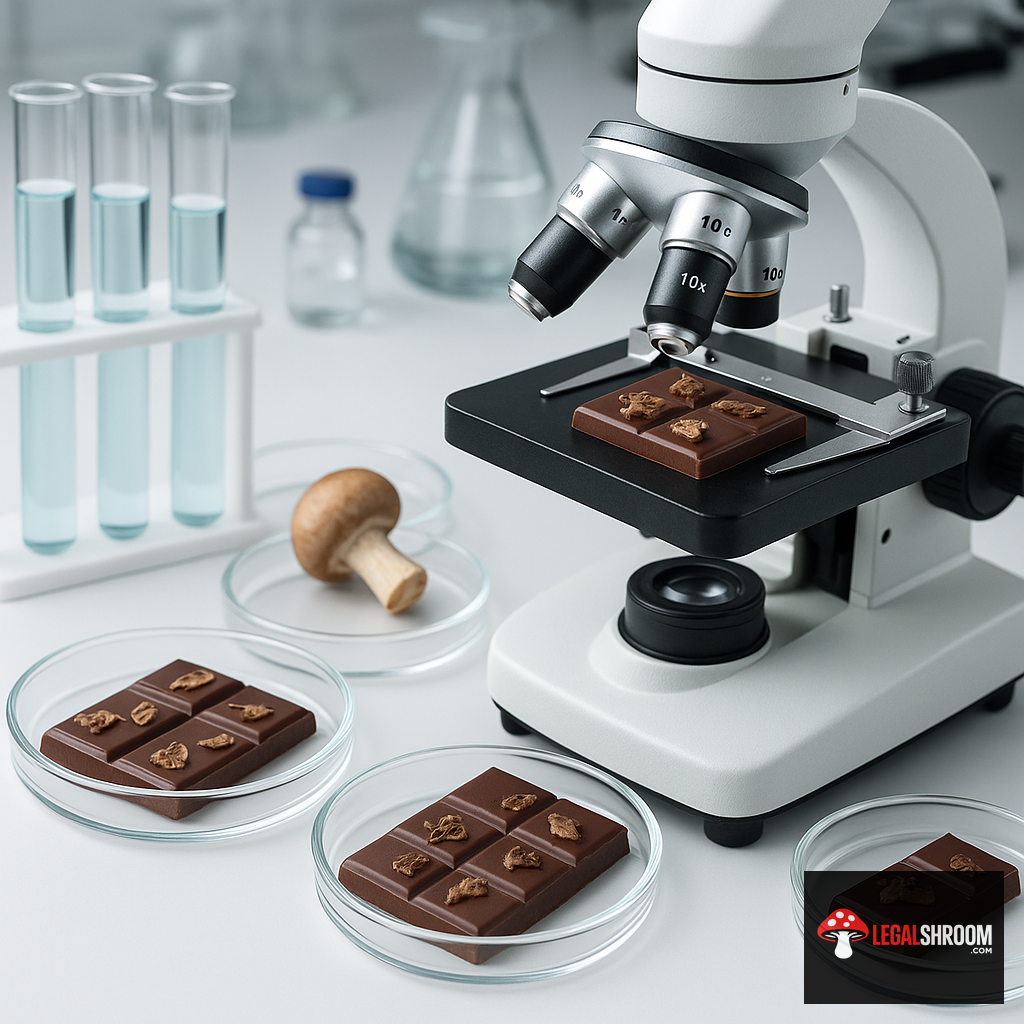
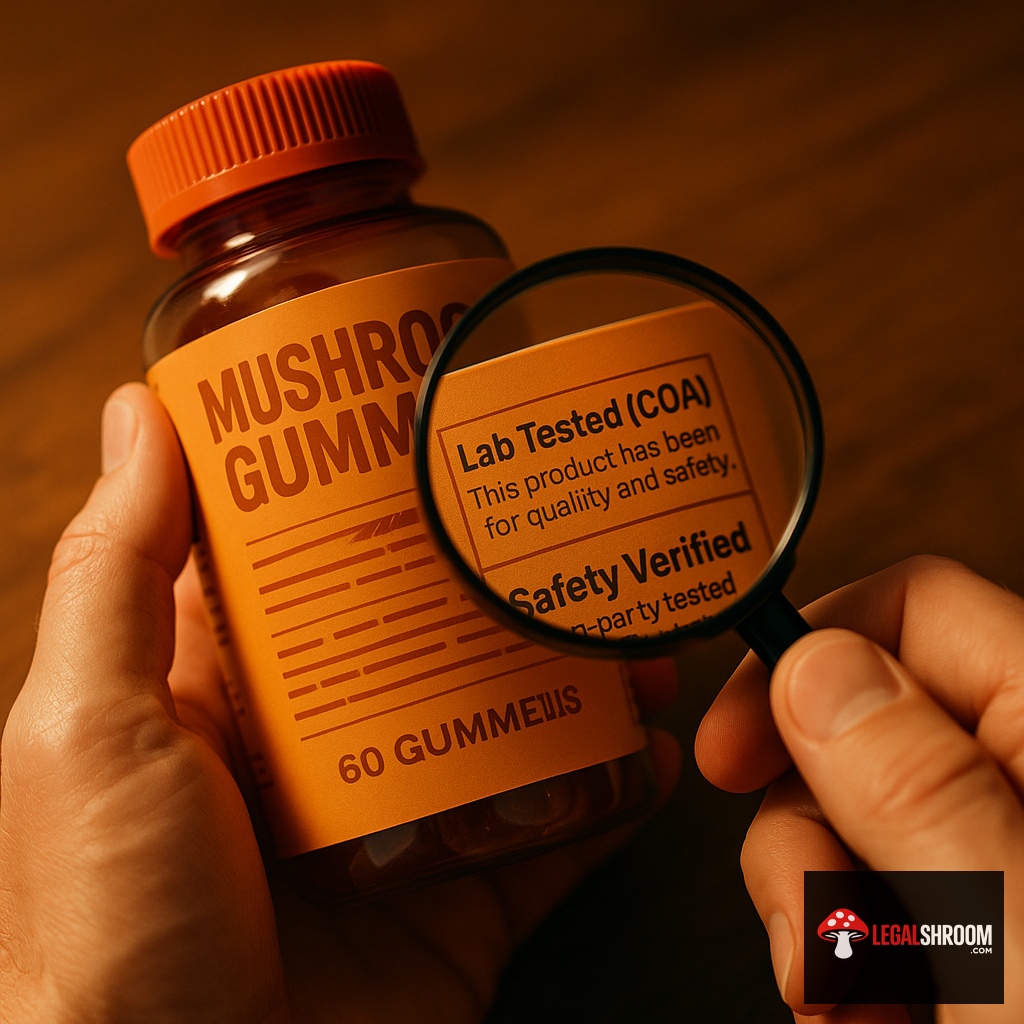
🚩 No lab testing or COA - Certificate of Analysis (COA) from third-party labs is standard for legitimate products. No COA = no way to verify what's inside.
🚩 Suspiciously cheap - Real mushroom products (especially ones with synthetic tryptamines) cost money to produce. If a "5g psychedelic chocolate bar" costs $15, it's either fake or dangerously underdosed/overdosed.
🚩 Packaging looks like candy brands - Counterfeiters mimic popular candy (Nerds Rope, Skittles, Wonka bars) to attract buyers. These are almost always fake.
🚩 Claims to contain psilocybin - Psilocybin is federally illegal (Schedule I). If a product openly claims to contain it and is sold at a gas station, it's either lying or illegal.
What Legitimate Products Look Like:
✅ Clear ingredient disclosure - Lists specific compounds (4-HO-MET, Amanita muscaria extract, Lion's Mane) with mg dosages per serving
✅ Third-party lab testing - Includes batch-specific COAs testing for potency, purity, heavy metals, and contaminants
✅ Professional branding - Real company website, contact info, social media presence, customer reviews
✅ Sold through reputable vendors - Specialty shops with knowledgeable staff, online vendors with return policies and customer service
✅ Realistic pricing - Quality mushroom products cost $25-60 depending on dosage and brand. Too cheap = red flag.
✅ Honest labeling - Doesn't make illegal claims, includes warnings and dosage instructions
Why Gas Stations Sell Sketchy Products
Gas stations aren't evil—they're just incentivized to carry high-margin impulse buys without vetting suppliers.
Here's how the supply chain works:
-
Distributors approach gas stations with "legal psychedelic" products that promise high profit margins (often 100-200% markup)
-
Gas station owners don't verify claims - They're not chemists. If the distributor says it's legal and provides an invoice, they stock it.
-
No accountability - When customers complain or get sick, the distributor disappears. The gas station blames the distributor. Nobody faces consequences.
-
High turnover products - Gas stations rotate inventory constantly. By the time issues surface, the product is gone and replaced with a different sketchy brand.
-
Zero quality control - Unlike smoke shops or dispensaries (which have reputations to protect), gas stations don't care if products are fake. They just want impulse sales.
This creates the perfect environment for scammers to flood the market with counterfeit or dangerous products.
What Lab Testing Actually Reveals
Third-party labs test mushroom products for:
Potency - Are the labeled active compounds actually present? At the claimed dosages?
Purity - Are there contaminants, solvents, or toxic byproducts from sloppy manufacturing?
Heavy Metals - Lead, arsenic, cadmium (common in cheap imported products)
Microbials - Bacteria, mold, yeast (especially in gummies and chocolates)
Pesticides - Residual pesticides from mushroom cultivation
Synthetic Adulterants - Undisclosed research chemicals, synthetic cannabinoids, or other drugs
Legitimate brands test every batch and publish results. Gas station products? Never tested. You're rolling the dice.
The Legal Gray Area Problem
Here's why gas station mushrooms are so sketchy:
Amanita muscaria (muscimol) is federally legal in most states. Synthetic tryptamines like 4-HO-MET exist in a legal gray area. Psilocybin is Schedule I illegal.
Scammers exploit this confusion:
- They label products as "Amanita blend" when they contain illegal psilocybin
- They claim "legal mushroom extract" while selling synthetic cannabinoids
- They use vague language to avoid explicit claims
Because enforcement is inconsistent and most buyers won't report issues, the market is flooded with mislabeled, dangerous, or fake products.
Legitimate vendors navigate this carefully:
- They only sell federally legal compounds
- They clearly label what's inside
- They work with lawyers to ensure compliance
- They avoid making medical or illegal claims
Gas stations? They just stock whatever distributors bring and hope nobody sues.
Where to Actually Buy Mushroom Products Safely
If you want real mushroom products without the Russian roulette:
1. Buy from specialty vendors with lab testing
Reputable online vendors and local smoke shops that specialize in mushroom products will:
- Provide batch-specific COAs
- List exact compounds and dosages
- Have customer reviews and a track record
- Offer customer service and returns
2. Check for third-party lab results before buying
Every legitimate product should have a QR code or link to lab results. If it doesn't, don't buy it.
Look for:
- Potency verification (confirms labeled compounds are present)
- Heavy metal testing (ensures safety)
- Microbial testing (confirms product isn't contaminated)
3. Avoid impulse purchases
Gas stations thrive on impulse buys. Do your research first:
- Google the brand before you buy
- Check Reddit for reviews (search r/MushroomSupplements, r/Amanita, etc.)
- Look for independent lab tests or customer experiences
4. Start with reputable brands
Established brands have reputations to protect. They can't afford to sell fake or dangerous products because word spreads fast in the mushroom community.
Ask staff at smoke shops for recommendations. Check online forums. Look for brands that have been around for years, not sketchy new products that popped up last month.
5. Shop at LegalShroom
We carry lab-tested Amanita muscaria and nootropic mushroom products from trusted suppliers. Every product includes:
- Third-party lab testing (COAs available)
- Clear ingredient lists with dosages
- Transparent sourcing
- Customer reviews
No mystery blends. No counterfeit packaging. No research chemical roulette. Just quality mushroom products you can trust.
Final Thoughts: Your Health Isn't Worth $20
Gas station mushroom products are cheap for a reason.
Sometimes you get lucky and the product is just ineffective candy. Other times you end up in the ER with a panic attack, or you unknowingly consume illegal substances, or you ingest toxic contaminants from sloppy manufacturing.
The risk-reward doesn't make sense. Spending $15 at a gas station vs. $35 from a reputable vendor isn't saving money—it's gambling with your health.
If a product doesn't have:
- Clear labeling with specific compounds and dosages
- Third-party lab testing (COA available)
- A reputable brand with online presence
- Transparent sourcing and customer reviews
Then don't buy it.
Your brain deserves better than mystery chemicals in a holographic wrapper.
Ready to skip the gas station gamble? Browse our lab-tested mushroom products and see what real quality looks like.
Disclaimer: This article is for educational purposes only. Mushroom products are not FDA-approved and are not intended to diagnose, treat, cure, or prevent any disease. Effects vary by individual. Always research products before purchase and consult a healthcare provider if you have medical concerns. LegalShroom only sells federally legal mushroom products in compliance with applicable laws.
Ready to Try Functional Mushrooms?
Explore our premium selection of functional mushroom products
Browse Our Products